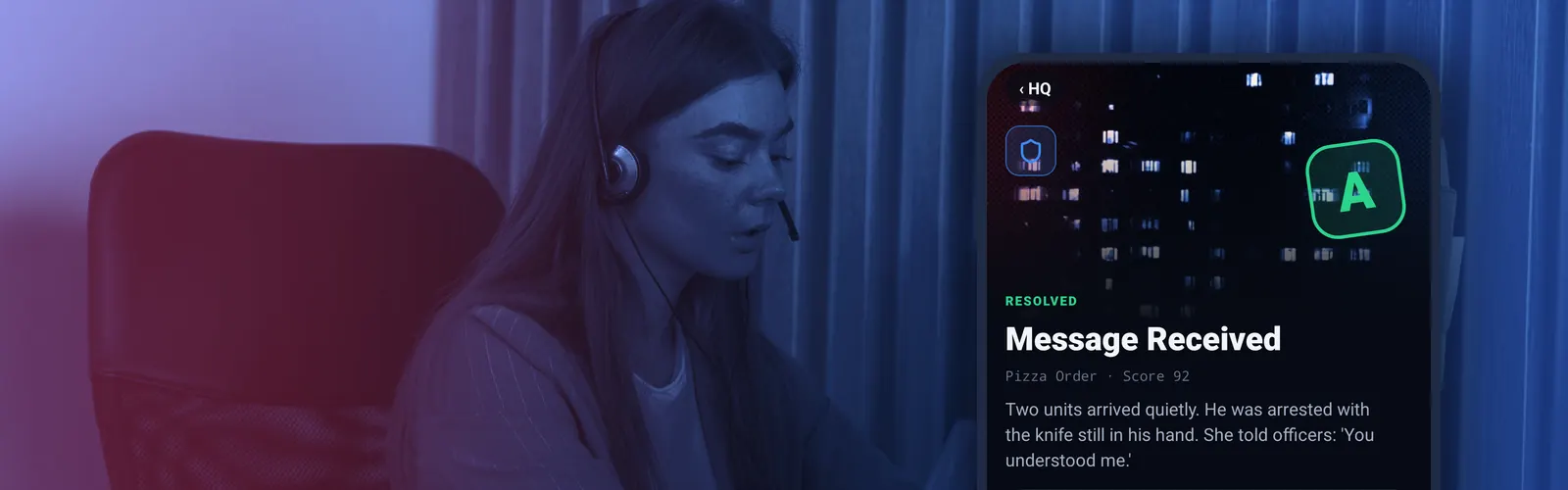
Becoming a 911 dispatcher doesn't usually need a degree, but it does need a particular kind of person: calm under pressure, quick on a keyboard, and able to listen to the worst moments of people's lives without falling apart. Requirements vary by state and by agency, so treat this as the typical path and check the details with the centers you're applying to.
Typical requirements
- A high school diploma or GED.
- A minimum age, usually 18, sometimes 21.
- A clean background check. Many agencies also require a drug screen, and some a polygraph or psychological evaluation.
- Good hearing and clear speech. Bilingual applicants are often in demand.
- A typing test. Speed and accuracy both matter, because you type while you talk.
The hiring process
- Application. Jobs are posted by cities, counties, sheriff's offices and regional emergency communications centers, often under the title public safety telecommunicator or emergency communications officer.
- Aptitude testing. Many agencies use computer-based tests that check multitasking, listening, memory, map reading and data entry. CritiCall is one widely used example.
- Interview. Expect scenario questions about stress, judgment and handling difficult callers.
- Sit-along. Some centers invite candidates to sit with a working dispatcher for a few hours. If you get the chance, take it. It's the best way to know if the job is for you.
- Background and conditional offer.
Training and certification
New hires usually go through classroom training, sometimes a state academy, followed by months of on-the-job training paired with a communications training officer. Common certifications include a basic telecommunicator course, emergency medical dispatch (EMD), and CPR. Many states set their own minimum training standards for telecommunicators.
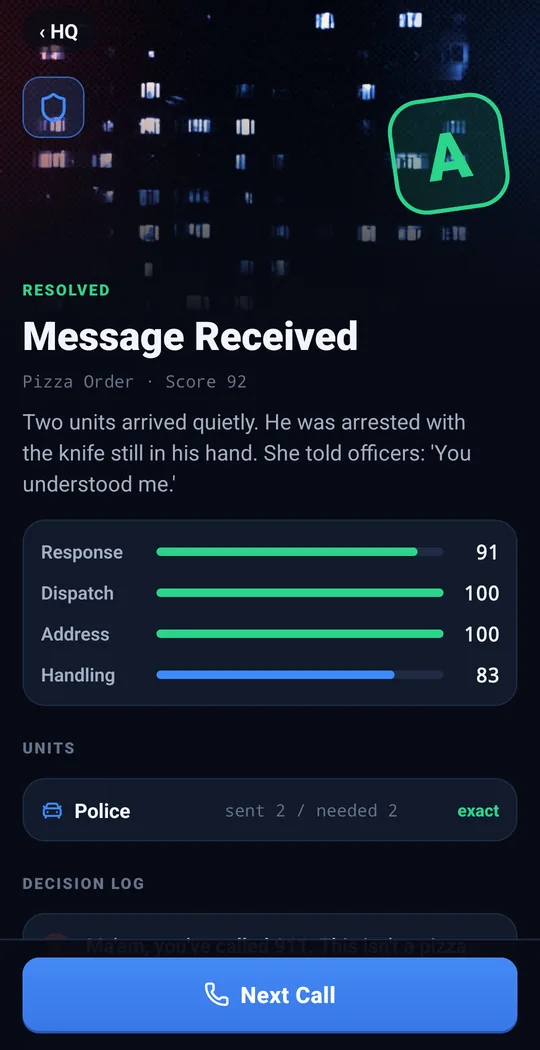
Is a game good practice?
Honestly, only up to a point. A game can't teach you your agency's protocols, CAD software or radio procedures, and 911 Dispatch is not training. What it can do is give you a feel for the shape of the job: confirming locations, deciding what to ask next, triaging limited units and making decisions on a clock. If you find that pressure exciting rather than miserable, that's a useful thing to learn about yourself before you apply.
Where to find reliable information
For pay and job outlook, see the US Bureau of Labor Statistics' Occupational Outlook Handbook entry for public safety telecommunicators. For training standards, check your state's 911 board or POST agency, and professional groups such as APCO International and NENA.