When someone collapses and isn't breathing normally, the person who calls 911 often becomes the first rescuer. Dispatchers are trained to coach callers through CPR over the phone, often called telephone CPR or dispatcher-assisted CPR. Starting compressions before the ambulance arrives can make a real difference to someone's chances of survival.
The two questions that matter
The dispatcher will quickly ask: Is the person awake? and Are they breathing normally? If the answer to both is no, they'll start CPR instructions straight away.
One common trap is agonal breathing: gasping, snorting or snoring-like breaths in someone who's unresponsive. It can look like breathing, but it isn't normal breathing, and it's a sign of cardiac arrest. If you're unsure, say exactly what you see and let the dispatcher decide.
The hands-only CPR steps a dispatcher coaches
- Put your phone on speaker and set it next to you.
- Get the person flat on their back on a firm surface, like the floor.
- Kneel beside their chest. Put the heel of one hand in the center of the chest, and your other hand on top.
- Lock your elbows and push down hard and fast, about 2 inches (5 cm) deep, at a rate of 100 to 120 pushes a minute. Let the chest come all the way back up between pushes.
- Count out loud. The dispatcher may count with you.
- Don't stop until responders take over, someone brings an AED, or the person starts breathing normally.
For adults, dispatchers usually coach hands-only CPR, without rescue breaths. Instructions for children and babies are different, and the dispatcher will tell you what to do.
Don't wait to be sure
People often hesitate because they're afraid of doing it wrong or hurting someone. Without CPR, a person in cardiac arrest is very unlikely to survive. The dispatcher is there to guide you, so you don't have to remember everything.
How it plays in 911 Dispatch
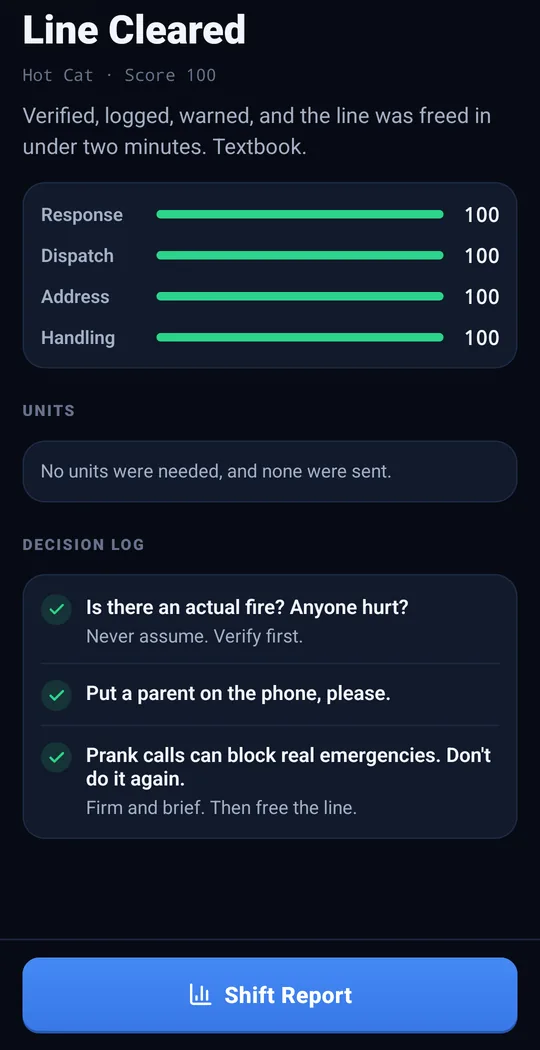
Medical calls in 911 Dispatch, like Man Down and Mommy Won't Wake Up, turn on these same moments. A caller describes snoring that suddenly stops. Do you read that as sleep, or as a heart that has stopped? Send the ambulance, ask the right two questions, and coach the compressions. Forget the ambulance and CPR alone won't be enough, and the debrief will tell you why.
This page is general information, not medical training. The best preparation is a hands-on CPR course from an organization such as the American Red Cross or the American Heart Association. In an emergency, call 911 and follow the dispatcher's instructions.